Offensive Icon: A Bold Symbol for Modern Design Projects
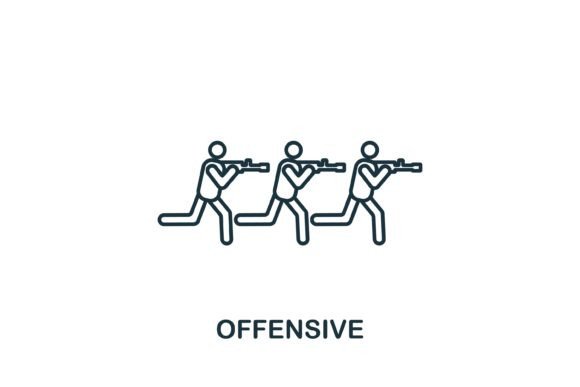
The Offensive Icon is a striking, versatile graphic element that has gained popularity in web design, infographics, and various digital templates. This simple yet powerful symbol, often used to represent a confrontational or assertive stance, is designed to make a strong visual impact. Unlike more traditional icons, the Offensive Icon stands out with its bold, war-like imagery, making it a unique choice for designers looking to add a touch of intensity to their projects.
What Makes the Offensive Icon Distinct?
The Offensive Icon is characterized by its aggressive, forward-moving design, which can be interpreted as a spear, a sword, or a stylized arrow. This versatility allows it to fit into a wide range of contexts, from representing a competitive edge in business presentations to symbolizing a call to action in marketing materials. The icon's simplicity makes it easy to integrate into various design styles, while its boldness ensures it remains a focal point.
Comparison with Similar Graphic Elements
When compared to other graphic elements, the Offensive Icon offers a distinct advantage in terms of its visual impact and symbolic power. Traditional icons, such as those representing peace or collaboration, may not convey the same level of urgency or assertiveness. For instance, a dove or a handshake icon might be more suitable for conveying harmony and cooperation, whereas the Offensive Icon is perfect for scenarios where a more dynamic and forceful message is needed.
Strengths and Tradeoffs
Strengths:
- High Impact: The Offensive Icon's bold design makes it highly noticeable, ideal for grabbing attention in a crowded visual landscape.
- Versatility: Its abstract nature allows it to be used in a variety of contexts, from business to sports and beyond.
- Ease of Use: The icon comes in multiple file formats (EPS, JPG, AI, SVG), making it easy to edit and incorporate into different design projects.
Tradeoffs:
- Limited Appeal: While the Offensive Icon is effective in certain contexts, it may not be appropriate for all audiences or situations, especially those requiring a more subdued or positive tone.
- Potential Misinterpretation: The aggressive nature of the icon could be misinterpreted in some cultures or settings, potentially leading to unintended negative perceptions.
Best-Fit Situations and Limitations
The Offensive Icon is particularly well-suited for projects that require a strong, assertive message. For example, it can be used in sports marketing to highlight a team's competitive spirit, or in business communications to emphasize a company's proactive approach. However, it may not be the best choice for more sensitive or community-oriented projects, where a more inclusive and harmonious symbol would be more appropriate.
Making the Right Choice
Choosing the Offensive Icon depends on the specific needs and goals of your project. If you are looking to create a powerful, attention-grabbing visual that conveys a sense of urgency and competitiveness, this icon is an excellent choice. On the other hand, if your project requires a more subtle, collaborative, or positive message, you may want to consider alternative symbols that better align with these values.
Practical Examples and Comparisons
For instance, in a corporate presentation, using the Offensive Icon to represent a new, aggressive market strategy can effectively communicate the company's intent. In contrast, a non-profit organization focused on community building might prefer a more inclusive symbol, such as a circle of hands, to convey unity and support.
Similarly, in web design, the Offensive Icon can be used as a call-to-action button, encouraging users to take a decisive step, such as signing up for a newsletter or making a purchase. In comparison, a more neutral or friendly icon, like a smiling face or a thumbs-up, might be more appropriate for a user-friendly, welcoming website.
Conclusion
The Offensive Icon is a powerful and versatile graphic element that can add a strong, assertive touch to your design projects. By understanding its strengths, tradeoffs, and best-fit situations, you can make a more informed decision about whether it is the right choice for your specific needs. Whether you are aiming to create a high-impact visual or need a more subtle, inclusive symbol, there are options available to help you achieve your design goals.